This Is Why No-Phone Policy Is Saving the Dancefloor
When the crowd gathers for a proper beat-driven night out, the dancefloor becomes sacred. It’s where rhythm takes control, where the sound system pulses through your body, where connection and release happen.
But what happens when smartphones start to dominate the scene - filming drops, scrolling stories, capturing content instead of presence?
For the first time, starting from its season-opening on Friday, 17 October 2025 - marking the beginning of a new era for the club - Dybbuk exercised a bold and courageous move: a no-phone policy. No phones on the dancefloor.
A decision that resonates deeply with the roots of our culture: freedom, community, and respect for the music.

Why does it matter? Here are five strong reasons - and yes, both science and DJ culture back them up.
1. To Connect with the Music
Phones held aloft filming the DJ or the crowd freeze the moment into a frame. But music - especially electronic music - asks for your full attention. It asks you to feel, not just see. With your phone tucked away, the sound system becomes the protagonist, the rhythm the guiding force. You are no longer a spectator; you become part of the wave.
In underground culture, the dancefloor experience is an embodied one. Ethnographic research on techno and psytrance crowds in Melbourne showed how mediating technologies (sound, lights, substances) shape a fully immersive, bodily experience. The device in your hand - especially when used for filming - interrupts that flow.
Also, data reveal a striking fact: 55% of music fans admit they prioritize capturing video over being present, yet only 13% ever watch those videos again. When you truly listen, the sound becomes the center. The drop hits differently. The bass becomes your heartbeat. So turn your phone off, or at least put it away, and let the music speak loud.
<script async src="//www.instagram.com/embed.js"></script>
2. To Connect with Other People
Clubs and dance events are more than lighting and bass... they’re social ecosystems. Without a phone in your hand, you look around you instead of down. You meet eyes with strangers, share movement, and slip into the collective groove.
Industry voices in nightlife agree: “The presence of phones on the dancefloor detracts from that collective energy.” When everyone’s filming, the crowd fragments into individuals capturing rather than individuals dancing. Put your phone away and you’re free to let the crowd be your mirror and your partner. One body, many hearts, one rhythm. That’s where magic happens.
<script async src="//www.instagram.com/embed.js"></script>
3. To Connect with Yourself
The dancefloor is one of the few places left where you can simply exist in the moment: no notifications, no scrolling, no pull to the external world. You become the movement, the beat, the room.
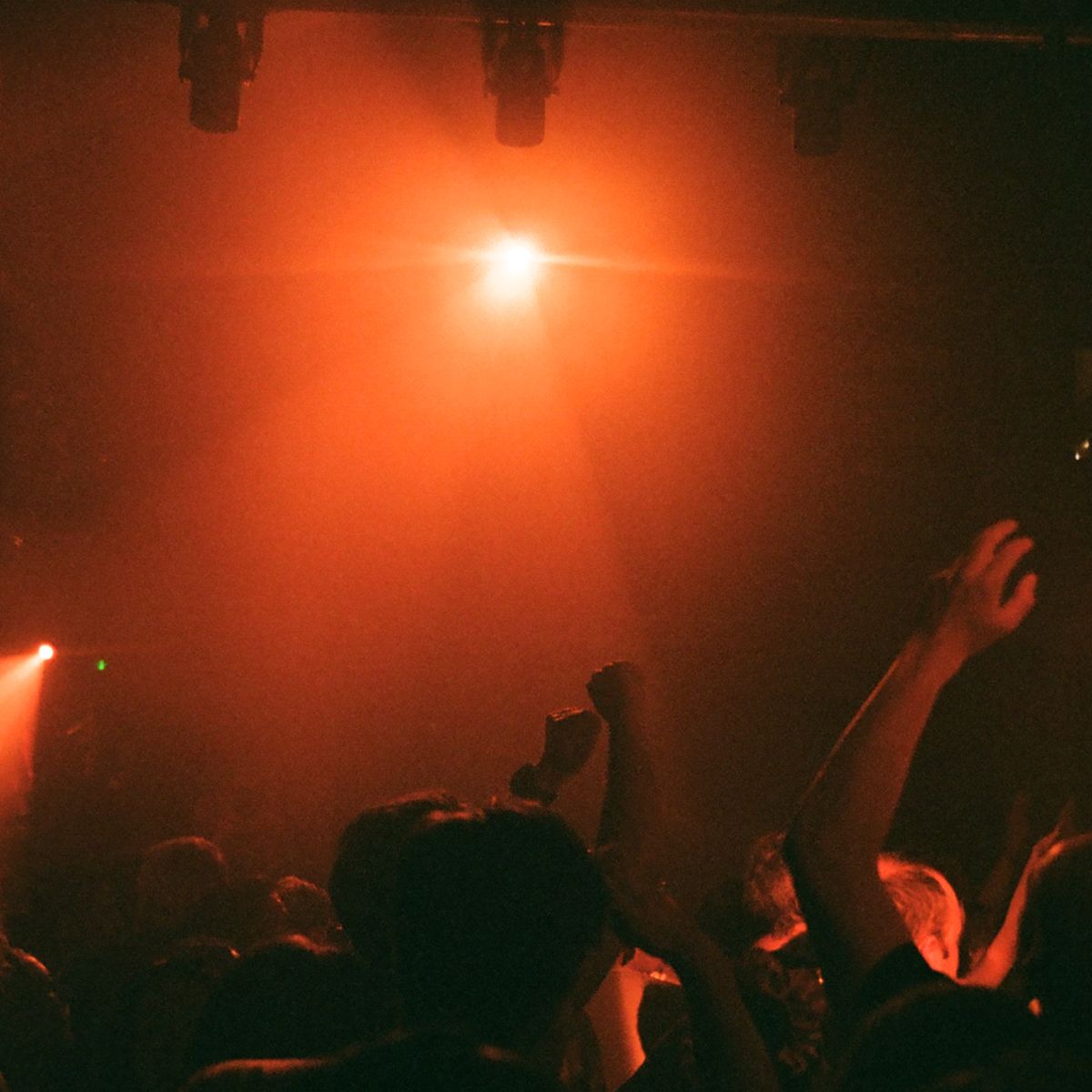
Imagine this: you step into the darkness, the sound system shakes the floor, you raise your hands, close your eyes... and there’s nothing between you and the rhythm. No camera frame, no selfie glow, no filter. Just now.
When you’re fully present, the internal noise fades. You reflect on where you are, remember who you are, and leave the floor lighter than when you entered. That reconnection is one of the reasons dance culture continues to thrive.
4. To Disconnect from Your Problems
Everyone brings something into the club - stress, responsibilities, messages, dual lives. The dancefloor can be a sanctuary, a space to temporarily surrender the outside world. But phones drag you back. A ping, a flash, a notification. Suddenly you’re not dancing; you’re managing your life.
Venue operators have observed that banning filming or phone use frees the crowd to truly let go. For those hours, the music takes care of you... so, you just have to surrender.
In a sense, a no-phone policy becomes a ritual of release: you hand in your device, you hand in your burdens, and you let the beat take over.
5. For the Culture
Electronic dance music was built on pillars of freedom, community, and love for the music. When smartphones dominate, these values weaken. Filming others without consent, messaging mid-set, checking social media instead of dancing. These are distractions.
Many serious clubs and promoters worldwide are taking this seriously. The movement is spreading... from Berlin and Ibiza to Manchester and now in Athens. When we protect the experience, we protect the culture. We preserve respect for the artist, for the crowd, for the moment.
When your phone is off, the crowd breathes together. The DJ sees faces, not camera lenses. The party becomes less about content and more about connection.
Final Thoughts
When the lights drop and the first beat of the night pulses through the room, ask yourself:
Are you watching or dancing?
Are you recording or living?
Because a video can never capture the high of a collective drop. A moment lived is worth infinitely more.
From now on at Dybbuk, everyone's choosing the latter: to drop the phones and raise the energy. A night where the only screens are strobes, the only transmissions are basslines, and the only connection is human.
So when you’re on the floor: silence your phone, and dance. For yourself. For others. For the culture.
Sources/References
Vitos, B. (2015). The Dance Floor Experiment: Researching the Mediating Technologies and Embodied Experiences of Electronic Dance Music Events. Popular Music & Society, 40(2), 131-150
Solberg, R. T. & Jensenius, A. (2017). “Pleasurable and Intersubjectively Embodied Experiences of Electronic Dance Music.” Empirical Musicology Review, 11(3-4), 301-318
“55% of Music Fans Prioritise Capturing Video of Performance Over Being Present in the Moment.” SIX AM / Heineken research article, 25 Oct 2024
“Are Phone-Free Dance Floors Going Mainstream?” Beatportal article, 14 Oct 2024
Zebracki, M. (2016). “Embodied techno-space: An auto-ethnography on affective citizenship in the techno electronic dance music scene.” Emotion, Space and Society
Stay connected with dancetoday - follow us on social media for the latest stories, insights, and news shaping the electronic dance music world.